1. Before work starts
The team confirms the scene is released, gathers access details and talks through what the owner wants kept.
St. Louis, MO · City of St. Louis
What happens when police finish and the mess remains in St. Louis? Call (877) 812-4220. Cleaners handle fluids, damaged flooring, fingerprint powder and disinfection.
If anyone is in danger, call 911 first. For a suicide crisis, call or text 988.
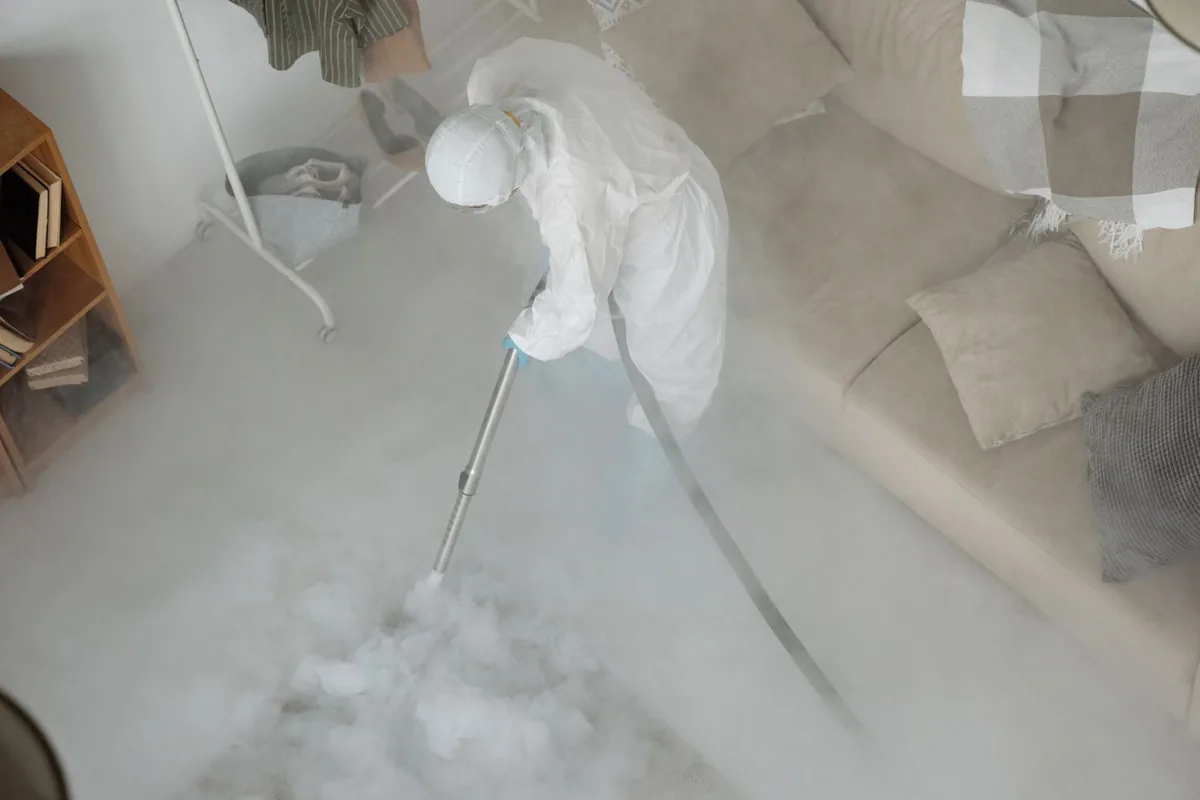
Crime scene cleanup is a form of biohazard remediation. Cleaners wear protective equipment, contain the affected area, remove contaminated materials and disinfect whatever stays.
If a crime has left your home, rental property, business or vehicle unsafe in St. Louis, call St. Louis Biohazard Cleanup Help for a cleanup team anywhere in City of St. Louis. The crew follows OSHA bloodborne pathogen rules and works only after the scene is released.
About 17% of housing units in St. Louis sit vacant, and an empty property can go unchecked, so a scene may be found late and need deeper cleaning. Many homes in St. Louis, about 86% built before 1980, have layered flooring and old padding that hold fluids and need removal.
The work often covers:
The team confirms the scene is released, gathers access details and talks through what the owner wants kept.
Carpet, padding, drywall, mattresses and upholstery that fluids reached are usually cut out and removed.
Materials that cannot be saved are bagged and removed. What remains is scrubbed and disinfected until it is safe to touch.
Deodorizing and air filtration remove the smell at its source so the room feels normal again.
Expect crime scene cleanup in St. Louis, MO to cost roughly $1,000 to $10,000, with the final price set after an on-site assessment.
How quickly cleanup happens can affect the price. Fluids that dry and soak in over time take more work than fresh ones.
| Type of job | Typical range |
|---|---|
| Published span for crime and blood scenes | $1,500 - $10,000 |
| Violent altercation scene | $1,500 - $4,000 |
| Most residential situations | $1,500 - $7,500 |
| Most residential crime scene jobs | $1,000 - $5,000 |
These ranges come from published cost guides (Crime scene cleanup cost guide from a biohazard cleanup company, PushLeads, BioCleaners Directory) and are not a quote for St. Louis. Price drivers include number of rooms affected, whether blood reached carpet, subfloor or walls, time since the event, waste disposal. For a real number, call (877) 812-4220.
Often yes. The crew can close off one area, use barriers and plan around staff and customers. Tell the team about opening hours and entrances so the work causes as little disruption as possible.
Yes. Cleaners treat seats, carpet, headliners and vents, remove soaked materials and disinfect the cabin. Vehicles are often processed by law enforcement first, so confirm it has been released.
Yes. Fingerprint powder and tear gas residue are common after police work. Both need careful methods, because wiping or washing them can spread residue. Crews test the area and clean it with matched products.
Yes. Dried blood can still carry bloodborne pathogens, and scraping or wiping it can release particles. It should be handled in protective gear and disinfected, which is why crews treat old stains as seriously as fresh ones.
Yes. Owners and managers often book crime scene cleanup to make a unit safe for the next tenant. Lease terms and local law decide who pays, and an attorney or tenant rights group can explain the details.
That is up to law enforcement and the case, and it can vary. Cleanup comes after the release. The length of the cleanup itself depends on the size of the scene and how far fluids spread.
One call starts the process, and no details are required up front.
Call (877) 812-4220